Wednesday, November 10, 2010

Blog Post: Prince of Persia (2008) is...pretty good, actually.


Well, I almost feel that I owe the Prince of Persia series a bit of an apology. In my review of Enslaved I mentioned that I couldn't stand Prince of Persia. I based that on the bits I had played of Prince of Persia: The Two Thrones, which I pretty much hated, and the large chunks I had played of 2008's cel shaded Prince of Persia. (PoP 2008 for the rest of the post.) After finishing Enslaved, I decided just for fun to give PoP 2008 another shot, and lo' and behold, it's actually a really fun game. It just takes some time to get into.

My biggest issues in my first attempt to play it stemmed from its non-linear direction, which makes it feel too much like I'm completing a checklist of objectives...a problem I have with non-linear games in general. Due to the non-linearity, there are always several paths you can take at any given moment, but to get to your desired location, which you select from the menu, you obviously have to know where you're going. This means that you must rely almost constantly on princess Elika to point you in the right direction. I also wasn't originally thrilled with how badly I was judging jumps and constantly falling to my "death." (You don't actually "die," in the game, though.)

But as I played the game with a bit more of an open mind, I found myself getting the hang of the platforming and controls. I also began to appreciate the story a bit more. It's definitely not Shakespeare, but the prince and Elika actually have some pretty great banter and the more I found myself listening to their optional discussions, the more I found myself liking them.

Visuals are also amazing. Cel shading is almost always a great choice and this is a very pretty game. Music's also awesome. The only thing I still just can't get into is the combat system, which just feels clunky. But I'm glad I started playing this again. I'm not sure what Ubisoft plans to do with this series, but I'd love to see another installment like this, bringing back a cel shaded world and keeping up this game's great sense of humor and character banter. Good stuff. If you haven't tried this out yet it's a good time.

Saturday, November 6, 2010

Blog Post: Happy 10-year anniversary, Shenmue.


On this day 10 years ago, I remember venturing to my neighborhood toy store to pick up a Dreamcast game that was hyped to be "the most amazing game ever made," Shenmue. Whether or not the game actually lived up to the hype depends on who you ask, of course. But for me, Shenmue and its sequel ended up being a gaming experience that, 10 years later, I'm still waiting to be surpassed, or even equaled. As time goes on, I'm beginning to accept the fact that it may never happen: Shenmue was just something special, and there’s simply nothing like it.

November 6th, 2000 marked the day that Shenmue was released to North American retailers. Being in middle school at the time, my money was pretty limited, so it was rare that I’d ever buy a game without first renting it. But Shenmue was something different. This was something that Sega Dreamcast owners had been looking forward to since we had first seen any (amazing) image from it. It was late in the afternoon, and I know that in a little bit a group of us were going over to a friend’s house to spend the night, but thought I could pick up Shenmue first and hopefully get some time with it before heading over there. Long story short, I got it, played about an hour of it at my house, then, so amazed by what I played, I brought the game with me to my friend’s house to show everyone. We all literally spent the entire night playing it.


Shenmue is a detective story. It’s a game where your main character, Ryo, witnesses his father being murdered, and vows to somehow track down the killer and take revenge. You were then set loose in a fully-realized town, with shops to enter, money to spend, arcade games to play, people to talk to, toy capsules to buy, fights to get into, and, of course, that cat to take care of.

Exploring Dobuita was an eye-opening experience from the moment Ryo first set foot in it. The sound design was amazing, with the mournful howling of the neighborhood dogs, the sound of the crows squawking as night approached, and the footsteps of your character as he trudged through the snow all providing the perfect backdrop. You could practically feel the crisp winter air as you wandered through the streets, and could actually imagine that all these townsfolk had lives and were going somewhere. I can’t even describe how amazing all of these things felt back in 2000. The mystery, which I was put into this world to solve, was compelling, and nothing beat the feeling of satisfaction that came from getting an important clue from a local and seeing it point the way forward as Ryo jotted it down in his notebook…so addictive.  The music, the gameplay, the atmosphere, the story, the fights…..what an experience Shenmue was. Shenmue 2 then came along, and not only did lightning strike twice, but it was even better the second time, ending up being one of the best sequels I’ve ever played, and still, to this day, the best game I’ve ever played.

There is nothing like it. These games can still be played and enjoyed today, and in fact I made it a point to go back and replay them many times. But now they feel pretty dated, as time has finally caught up with the series. People who play them for the first time today will likely never understand why an entire fanbase is so frigging obsessed with the Shenmue games. It was really one of those things you had to be there at the time to understand, and Shenmue (and Shenmue 2, for those of us who imported the Dreamcast version) was probably the best sendoff the Dreamcast could possibly have had.

Here’s to Shenmue, the Sega Dreamcast that made it possible, and of course, the one day when we finally will get to finish the saga.

Watch this and remember.

Friday, November 5, 2010

Blog Post: No more 3D platformers?


Is anyone else noticing all the nostalgia going around the video game industry this console gen? Somewhere between the whole Sonic 4 thing and the (amazing) new trailer for Donkey Kong Country Returns (check it out: http://www.youtube.com/watch?v=ZMSRo2cNnyE&feature=player_embedded ) I'm realizing how much people have been loving the past lately, and it looks like this has started to translate into game development, especially in the platformer genre. It’s lead me to wonder if we’re witnessing the slow but sure death of the 3D platformer.

Remember when platformers were all about complete re-invention? Think back to the N64, PS1, and Dreamcast days when the genre was all about totally changing itself from its 2D setting. I think back to games like Sonic Adventure, Super Mario 64, Donkey Kong 64, Rayman 2, etc...and it's almost amazing how much their developers were willing to change them for the 3D generation.

It suddenly hit me when playing Sonic 4, which got me thinking back to the Genesis Sonic games. I can’t believe how ambitious Sonic Adventure was. Say what you want about some of the changes, but for the first time in the series, we were in true 3D, which was a huge change in and of itself. But it didn't just stop there. SonicTeam brought about new characters and several new types of gameplay, there were the exploration zones (adventure fields) that were created, which contained their own hidden secrets, and then there was the addition of cutscenes and voice acting. There was a soundtrack which included fully produced rock songs, (c’mon, you know you remember some of those tunes) the Chao gardens, which were like an entire game themselves....it's almost mind-blowing how ambitious this game was. If you play Sonic and Knuckles then look at Sonic Adventure…this wasn’t just a tepid jump into 3D, this was a headfirst dive into the relatively new 3D landscape.

The same went for the the likes of Mario 64, which also switched things up in a huge way. We've had about 10 years of pure 3D gameplay, and looking at the genre now, we’re seeing New Super Mario Bros, we just got a new 2D Kirby game, we're getting a 2D Donkey Kong game, Sonic Colors will be predominently 2D, the Mario Galaxy series cut out almost all of the extra exploration, Rayman will be returning to 2D.......it's almost as if we're seeing all the extra stuff that was added to platformers over the past, well, decade+, being totally forgotten.


It's kind of amazing to me that a genre that seemed to change so much with the transition to 3D is now doing all it can to return to its roots, and I wonder if this is something that will carry across to the rest of the industry. I also wonder where platformers will be going in the future….will they stay in 2D, and if they do, will people begin to crave another evolution? Or are people happier with the simpler “move left and right” gameplay of a 2D platformer? Something to think about, I guess.

Thursday, November 4, 2010

Blog Post: What can be done to fix Sonic the Hedgehog 4


So, Sonic the Hedgehog 4 finally arrived last month, though it was with more of a whimper than a bang. That’s not to say all hope is lost. There are still two more episodes planned, and SonicTeam can easily make up for the somewhat disappointing Episode 1. Here’s what I think they can do to salvage the Sonic the Hedgehog 4 project:
                *New visual style= Sonic 4 featured a look that was very similar in style to the classic Sonic games. So similar that it was almost boring. None of the levels felt inventive of fresh. In a game like this, the levels should pop with visual style and feel unique to the Sonic 4 experience.
                *Better bosses= Sonic 4’s boss encounters were all about bringing back boss fights from earlier in the series with minor tweaks. No idea what they were thinking with that one, but Episode 2 should feature entirely new boss battles that make bosses from earlier games look simple in comparison. It’s been almost 17 years since Sonic 3, SonicTeam should probably act like it.
                *Level to level structure= One new thing SonicTeam did for Sonic 4 was allow you to select any level at any time from the main menu. This was an interesting idea but I think that overall, the game taking you from one level to another suits Sonic better. This builds momentum to the final battle and makes it feel more like you’re progressing through an adventure instead of just completing a checklist of levels.
                *Return the missing features= No multiplayer racing, no co-op, lack of some of the series’ better powerups, no check point bonus stages? C’mon, SonicTeam, let’s bring back the cool power-ups and features that Sonics 2 and 3 added to the mix. We didn’t want another Sonic 1 here, we wanted Sonic 4.
                *Better special stages= Sonic 4 did feature its own special stages, and though they were based somewhat on Sonic 1’s, they still played like their own thing. I think SonicTeam should take this even farther with Episode 2 and give us special stages worthy of the next gen hardware they’re on. Do something creative.
                *Fix the controls and physics= Go back to the physics used in the first 3 Sonic games. Sonic’s movement just didn’t feel right in Sonic 4. The fact that he stopped dead in his tracks as soon as you let go of the d-pad (regardless of how fast he was going) didn’t make any sense, and neither did the momentum on ramps. Improving the physics would address many of my gripes with Sonic 4's gameplay.
                *Bring back the other characters= I’m sure SonicTeam has this planned already, but it doesn’t hurt to say it anyway. Where are Tails and Knuckles? Bring ‘em back. They don't necessarily have to be playable, but they should at least make an appearance, especially given how big a part they played in Sonics 2 and 3.
And I think that’s about it. Sonic 4 still has great potential, and hopefully Episodes 2 and 3 live up to the name.

Tuesday, November 2, 2010

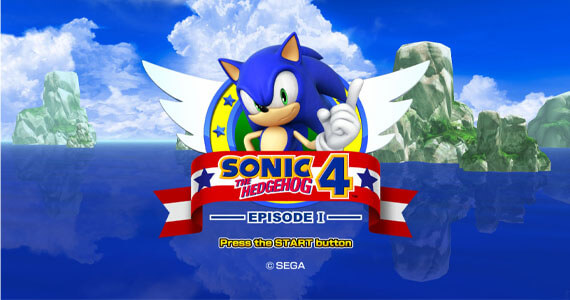
Review: So.....where's Sonic 4?


We all remember Sonic. For many kids growing up in the 90s, myself included, the Sonic the Hedgehog series on the Sega Genesis pretty much defined our childhood. Then video games went 3D, Sonic got his 3D rebirth in 1999, and with that, the quality of the series became much less consistent. Some of his 3D efforts, I thought, were very successful in capturing that Sonic magic. Although they haven’t aged particularly well (let’s be honest, though…not a lot of games from that era have) I thought the Sonic Adventure games were great experiences, and I thoroughly enjoyed 2009’s Sonic Unleashed. Unfortunately, between those we’ve gotten some terrible Sonic games, and the less said about these, the better. Sega has lately been taking steps to improve the quality of this franchise, however, and one of their first steps to doing so was to release Sonic the Hedgehog 4, a game done in the same exact style as those Genesis games back in the day. They’ve chosen to release the game in episodes, and with Episode 1 now here, (2 and 3 will arrive at a later date) the time has come once again to return to the classic 2D Sonic.

If only the game had more to offer. Granted, there’s something at least somewhat fun about getting to control the blue blur again in his classic setting, and everything from the music to the scenery is ready to follow suit. Sonic the Hedgehog 4 had a lot to live up to, however, and for the most part, it fails pretty dramatically as a sequel to the excellent Sonic the Hedgehog 3 and its second half, Sonic and Knuckles. First and foremost, the controls and physics have undergone a change for the worst. Sonic’s movement and speed feel very floaty, the physics are unpredictable and difficult to get the hang of, and the homing attack, which I think was a solid addition, fails to make up for the unnecessarily slippery controls. This should have been a game where fans of the Genesis series could pick up the controller and feel right at home, and unfortunately, that isn’t the case. Equally disappointing was the decision to play to fans’ nostalgia instead of adding anything new. All the enemies and almost all the bosses are recycled from earlier entries of the series with just minor tweaks. Each of the (only 4) levels all visually resemble levels from previous games as well. I understand that Sega probably wanted old school Sonic fans to celebrate these touches, but Sonic the Hedgehog 4 should have been an entirely new entry in the series like Sonics 2 and 3 were, not a trip down memory lane. This is even more disappointing when taking into account that many of the great features added to Sonic the Hedgehog 2 and 3, like a multiplayer mode, the checkpoint special stages, the co-op play, and the new Sonic powerups, have all been removed here. Clearly, this was a game meant to emulate Sonic the Hedgehog 1 rather than one meant to continue from where Sonic the Hedgehog 3 left off. If this had been released on the Genesis after Sonic and Knuckles, people would have looked at this for what it was: a huge step backward.

Overall, pretty disappointing. Sonic the Hedgehog 4: Episode 1 is a playable 2D Sonic game, but rather than being what it should be, a sequel to Sonic the Hedgehog 3, Sonic 4 simply comes across as a rehash, one that controls poorly to boot. There's nothing special about the final product. None of the bosses are particularly inventive or fun to fight, the levels are in shining HD but all feel like rehashes, the platforming is uninspired, the special stages are annoying, and even the ending's a ripoff of a previous entry in the series. This is a BLAND game that unfortunately positions itself as Sonic the Hedgehog 4. Here’s hoping they get it right for Episode 2, as I think there's still a chance to salvage what should have been Sonic's triumphant 2D return. You can do a lot worse for $15, of course, and Sonic fans I'm sure are dying to pick this up. I won't tell you guys not to, just don't expect much more than an average, short, and uninspired 2D rehash.

5/10
(This review is for the 360 version)
(My reviews go by a .5 scale)

On that note, lol, tomorrow (or the next day, depending on if I have time or not,) I'll post a list of things I think Episode 2 can do to redeem itself. So check it out.

Monday, November 1, 2010

Review: Enslaved: Odyssey to the West. Game's a lot of fun, give it a shot.

There are sometimes games released that are so fun and engrossing, so enjoyable from the moment they start all the way to the end, that they remind me of why I started playing video games in the first place. Enslaved: Odyssey to the West seems almost destined to be lost in the shuffle, which is too bad, because it's a game that I thoroughly enjoyed, and I'd easily recommend it to anyone who's a fan of platformers or games with great storytelling.


At the start of this cinematic adventure, you're given control of Monkey, a warrior-type who bears a bizarre resemblance to Mel Gibson... though thankfully, once you get past his odd character design and initially aggressive attitude, he becomes a very likable character. He wakes up in a prison aboard a slave ship, where he's freed from his captivity by a girl named Trip. In this futuristic, post-apocalyptic world, humans live in fear of mechs, robotic remnants from the war that destroyed their way of life, as well as the slave catchers, who look for humans and bring them against their will to a mysterious Pyramid. Monkey and Trip escape the slave ship just before it crashes in the ruins of New York City, a deserted wasteland that nature's already beginning to take back. Trip wants to return to her home town some 300 miles away, and needs Monkey's help. Though Monkey initially refuses to help her, Trip reveals to him that while he was unconscious, she put a slave headband on him. She informs him that if he fails to follow her orders, or tries to run away, the headband will deliver a fatal shock.

It's in these circumstances that the two unlikely main characters are partnered up and of course they grow to like each other more and more as the game progresses, their dynamic together being one of the story's highlights. Their cooperation also plays a big role in the gameplay department. Though you only control Monkey, you'll often have to pick Trip up, throw her across gaps, help her up ledges, etc. Very similar to Resident Evil 4. Trip has no skills in combat but lots of technical knowledge, and both characters quickly discover that they need each other to get where they're going. The game's a platformer very reminiscent of Prince of Persia, but with more emphasis placed on the combat than the platforming. Though there's a healthy amount of hopping platforms and climbing up walls to be found in this adventure, Enslaved will rarely let you fail while doing this. There are sometimes cinematic sequences where you must climb walls or hop platforms in a hurry as you run from something, and you can certainly fail these, but for the most part, the platforming element is totally painless. If there's a jump that Monkey can't make, you will simply not be allowed to attempt it, the A button only responding when you try to jump to a pole or ledge that Monkey can reach. Though some platformer fans might find that this makes the game too easy, I thought it helped Enslaved avoid the try-and-die" mechanics that make me personally not able to stand the Prince of Persia series.

Instead, much of the difficulty comes from the combat system, which may not re-invent the wheel, but provides a lot of fun. Monkey's movements feel fluid and natural, and he has plenty of moves and techniques that you can unlock as the game progresses. Scattered throughout the environments and inside enemies are collectable experience orbs. Collecting these allows you to customize your character the way you want him, and it's a surprisingly flexible system. For example, don't want Monkey's health to automatically regenerate? Simply don't buy that ability, and you get to rely on health packs just like the good old days. Though I would have liked to have seen maybe a bit more offensive combat moves at Monkey's disposal (I found myself relying on the "evade, jump-behind-the-enemy's-back" move far more than any others,) there's still plenty of cool upgrades and abilities that Monkey can learn.

As far as exploration goes, you're kept on a linear path, with your goal always clearly mapped out for you, which keeps things moving. The game sticks mostly to combat and platforming sections, but there are an assortment of puzzles, shooting segments, boss fights, and even a pretty awesome hoverboard-like machine that you can ride, all of which help to keep things fresh.

Also helping to make Enslaved such a compelling experience are the visuals and audio, which is, simply put, incredible. Though Enslaved takes place in a post-apocalyptic setting, the world is refreshingly colorful, and there's no shortage of breathtaking vistas and dynamic lighting. This is one amazing-looking game, and the sound design, from the atmospheric sound effects to the subtle musical score, is quite an accomplished bit of work as well. The only thing missing is a little extra polish. There are a couple technical glitches here and there, one of which required me to start from my previous check point, and other small issues, like a sometimes spotty camera, but these instances are rare and generally don't get in the way. The framerate can chug pretty badly at times, though this is for the most part unnoticeable, only really becoming apparent when facing off against large amounts of enemies in areas big enough for you to run from them.

Tying this all together is a great story. Co-written by 28 Days Later scribe Alex Garland and with a voice cast that includes the likes of Andy Serkis (Lord of the Rings) and some great facial expressions, (well, except when someone starts crying,) this is a story that never ceases to be entertaining. The characters are all likable, with one you encounter later in the game, Pigsy, adding to an already great dynamic. There's also a very effective use of live action (think Wall-E) and an ending that's actually pretty thought-provoking, sticking with me well after I finished the game. Like the rest of Enslaved, the story doesn't offer a whole lot of surprises, going more or less where you'd expect it to go, (except for that ending) but what it does, it does very well. The game might even be worth playing simply to see how natural and realistic video game dialogue can sound.

"What it does, it does very well" is pretty much Enslaved: Odyssey to the West in a nutshell. There's nothing here that exactly pushes the genre forward, but developer Ninja Theory (Heavenly Sword, which now I'm much more interested in playing) clearly knows how to do this type of game very well. The length is standard for an action game, (in other words, relatively short) and while I easily thought it was worth the $60, you should keep in mind that there's not a whole lot of replay value here. That said, Enslaved is a solid platformer with amazing visuals, great storytelling, fun gameplay, an intriguing world, and perfect pacing. It's the type of game where I couldn't put the controller down, telling myself "just one more level." It may be somewhat of a short-lived experience, but it's sure to stay in my mind for a long time.

8.5/10

(This review is for the 360 version)
(My reviews go by a .5 scale)

Announcement: More soon

Alright, I'm actually going to start updating this more frequently now, lol. Coming up soon are my reviews of Enslaved: Odyssey to the West and Sonic the Hedgehog 4: Episode 1.

I'm going to be posting things other than reviews soon too, pretty much more along the lines of editorials or thoughts....rants...whatever you want to call them. So....keep an eye out. 

-nS