Tuesday, January 18, 2011
Blog Post: Final Fantasy 13-2 announced. Could really go either way
Well played, Square-Enix, well played. Almost. Your domain name registration a little while back gave you away, but until then, I don't think many people saw this coming. This is normally not the type of thing I'm a fan of, (doing a direct sequel to a Final Fantasy game,) but I think there are a few differences between this and the "let's pretend it never happened" Final Fantasy 10-2.
*SPOILER WARNING: (Debut trailer for Final Fantasy 13-2) ....we'll see how long Square-Enix keeps this link up....don't watch if you plan to play Final Fantasy 13, as this is loaded with spoilers.*
With Final Fantasy 10, we had a game that much of the fanbase loved and felt ended in such an incredibly perfect way. Doing a sequel with J-pop and a Charlie's Angels-style presentation seemed insane, and sure enough, it was a really bad idea. Final Fantasy 13-2, on the other hand, follows a game that many felt didn't live up to its full potential, a game that had room for more. Final Fantasy 13-2 can, in theory, provide that. I think though that this will depend entirely on the type of game Square-Enix plans to make.
Final Fantasy 10-2 was clearly not a game designed with the intention to be better than the original. It was a light and fluffy, non-linear game with a rather throwaway story and multiple endings and a short 12-15 hour main quest. If Final Fantasy 13-2 plans to just do this again, then my hopes for it aren't too high. If this game is going to be developed, though, as a full-scale RPG, a game trying to be the best RPG of this gen, then I think it really can be. The developers of Final Fantasy do listen to fan feedback and they do take this into account: they know what fans didn't like about Final Fantasy 13, just like they knew what fans didn't like about Final Fantasy 12.
Some things that I think should definitely be done:
*Returning the RPG elements to the series: towns, npc interaction, and sidequests should be available. I'd actually prefer if the game had a linear narrative, (unlike FF10-2) but the gameplay should definitely allow for more exploration than was provided by Final Fantasy 13.
*Bring back Massashi Hamauzu as composer. Neither he nor Uematsu returned for FF10-2, which resulted in it feeling too different from FF10 and making it seem 2nd rate. Get the same composer back.
*Focus this one strongly on one character, preferably Lightning. Final Fantasy 13's "no 1 main character" approach worked for that game, but if we're going to come back to this world, I think it would be best to focus on a main character, (Lightning) and really delve into her personality. The other characters from FF13 can play small roles, but this should be Lightning's story.
*Put some thought into the story. This has the potential to be very similar to FF10-2 in the whole "keeping the peace as they try to rebuild the world" thing and this really needs to feel like something new. Hopefully the developers are working on setting this apart and giving it a reason for existing, something that I don't think Final Fantasy 10-2 ever achieved.
And that's pretty much what I'm hoping for with this. At this point I'm cautiously optimistic that this can end up being a great game. I'm not going to get my hopes up too high, especially with its comparatively short development time. But we'll see. I'm definitely interested to see more. Final Fantasy XIII-2 is releasing this year (!) in Japan for both the PS3 and 360. So we'll probably get it Spring 2012.
Sunday, January 16, 2011
Blog Post: Why fetch quests should end
Long time no see, everybody. It's January, a typically slow month for the video game industry as it recovers from the busy holiday season, and there hasn't been too much to play or talk about yet. But, seeing as it's been a while since I've posted anything, and with the awful Epic Mickey still fresh in my mind, I thought I'd do a blog post on why required fetch quests no longer have a place in video games.
There was a time when this type of gameplay was seen as fun and revolutionary. Back on the N64, Rareware (RIP) made a career out of developing 3D platformers like Donkey Kong 64, the Banjo Kazooie games, Conker...these all had a heavy emphasis on exploring and collecting. And for its time, this worked out very well. 3D gaming was still a fairly new concept, and so it was exciting to get to run around a 3D world, talking to non-player characters (NPCs) receiving quests, and doing these missions for them. It was exciting enough that it offset the fact that collecting items for people in a video game is generally not much more fun than it would be to do in real life.
Nowadays, though......eh, enough is enough. 3D is so commonplace that the act of running around a 3D world is, itself, not exciting anymore. It's what's done with the gameplay that makes the game stand out. Even Rareware seems to have realized this in recent years. Going back to Conker's Bad Fur Day on the N64, which had lengthy 3rd person shooter segments towards the end, and of course with games like Banjo Kazooie: Nuts and Bolts on the 360 almost removed platforming entirely, for better or for worse, it's clear that people realize that 3D platforming needs to change to stay alive. Exploration-driven platforming is still awesome and there's nothing wrong with giving us a huge world to explore, but give us something more exciting to do in it than endless collect-a-thons.
I wish somebody told this to Junction Point, who, with Epic Mickey, have developed an entire game around a non-stop series of collect-a-thons and fetch quests. In this day and age, people expect faster experiences from video games, experiences that are more fun: that don't feel like busywork. I think there's still a place for fetch quests in small amounts in the form of sidequests (Red Dead Redemption had a couple of these,) as long as you don't have to do these to continue through the game. Because c'mon, who finds this stuff fun?
Epic Mickey actually did pretty well sales-wise over the course of December, but I'll be surprised if even 1/3 the people who bought it make it all the way through the game. And the biggest problem is the dull, fetch-heavy gameplay. Enough is enough.
Saturday, January 8, 2011
Review: Epic Mickey. How disappointing can a game get?
Well this one I didn't see coming. I had been interested in Epic Mickey since it was first announced. Growing up in the Sega Genesis era, Mickey games like Castle of Illusion, World of Illusion, and of course, Mickey Mania, were larger than life to me. The idea of Disney teaming up with industry vet Warren Spector to develop the next Mickey game, a slightly darker take on the classic character, sounded almost like a dream come true. It was also revealed that this would be a full-fledged 3D platformer, and being a fan of 3D platformers myself, I was excited to see another one after so many platformers these days are making a move back into 2D. To my amazement, the game we've received is such a bomb in terms of its execution, especially in the gameplay department, that I really can't recommend it to anybody, whether it be kids or adults. Epic Mickey feels as if its development studio, Junction Point, played a few hours of Banjo Kazooie and then decided to take the worst aspects of that game and build an entire game devoted to them.
-Noooo! Enough with the fetch Quests! -
Which is too bad because Epic Mickey gets off to a promising start, and for the first hour or so I was completely sold on this gameplay. At the beginning of this adventure, Mickey is messing around in the Fantasia sorcerer's workshop and accidentally spills a big dark blot of paint onto a strange painting. He tries unsuccessfully to thin it out, but the blot lives on, eventually returning to Mickey's world to pull him into this painting. It's a world now ruled by the evil blot that Mickey created. The world, known as Wasteland, is made up of long-lost Disney characters, and it's ruled by Oswald the rabbit, who was almost totally forgotten once Walt Disney created Mickey Mouse. As you wander through this world you're given quests by others, and your available quests can be checked in the game's main menu. Many of these quests have multiple approaches you can take, and it's through this that Epic Mickey incorporates its "good and evil" system. Do you use your magic brush to spray paint thinner at your enemies, killing them, or do you use your magic brush to paint them, turning them good? This "good or evil" choice takes several forms over the course of the game, though it's always very obvious which is which.
Mickey controls decently enough, with a pretty far-reaching jump and double-jump. The cartoon-style cutscenes are charming and the dialogue's well-written. The paint and thinner concept seemed, at the start, promising. But this all comes crashing down when you actually get to the meat of the game and realize that there's just no fun to be had: not with the combat, not with the paint/thinner mechanic, not with the good/evil gimmick, and *especially* not with the quests that must be completed to progress through Wasteland.
Here's how Epic Mickey works. Once you have enough Power Sparks to operate the film projector, you are able to transport from Mean Street, the game's hub world, into one of the levels. Once here, you're placed into an environment, often with non-player characters hanging around. Mickey is given quests by these characters, and these will unlock the next projector, which will send you into the next area, where that process is basically repeated. Quests are either given to you by these NPCs, or will be explained to you by Gus, who serves as your guide through Wasteland. The biggest problem with this game is that these quests are *the game*, almost in its entirety. This non-stop barrage of collect-a-thons, fetch quests, and bland platforming that you're constantly asked to undertake makes up pretty much your entire Epic Mickey experience. Take, for example, Mickey's visit to Ventureland. Upon getting dropped into this Captain Hook-themed pirate universe, you're simply told to talk to 3 pirates, and each of them has a mission for you. "Search Ventureland for these masks." "Search Mean Street and OsTown for these flowers for this girl I like." "Go to the store and pick me up this compass!" Once you do all of these, you're transported to your next area, where even more of these types of quests are waiting for you. Sometimes you'll be given a choice in which quests to undertake, but when they all involve pretty much doing the same thing....collecting, there's never any option that's "more fun."
I have no idea who at Junction Point thought that this made for compelling platforming. Scouring all these areas for dumb little collectibles, or switches to hit, lamps to draw, or whatever, all while fighting an irritating camera, isn't any fun, especially when the mission requires you to backtrack to other areas in the game. As you go from one environment to another, you get to control Mickey in a short 2D segment based on one of the Disney classics. These are entertaining at first, mainly because some of them reminded me of Mickey Mania, (though not as good, of course) but to have to do these (unskippable) sections each time you travel back and forth from one location to another gets old very quickly.
And I hate to say it, but that's pretty much all Epic Mickey has to offer: it's just one giant collect-a-thon. When between levels, you do get to explore the hub world of Mean Street, and though it looks cool at first, you'll quickly discover how limited it is, pretty much consisting of a few enterable buildings like a museum, City Hall, and a couple shops, but nothing to get excited about. You're placed on Mean Street to collect the Power Sparks that will get you to the next stage, and you get these by doing tasks for people. These tasks almost all involve collecting one thing or another. Noticing a pattern here?
I don't mean to say this is all totally devoid of merit. There's something satisfying about stepping into the museum to discover that you've collected a rare item during your quest, and that the museum curator will buy it for a Power Spark. And there are charming Disney characters like Pete, Goofy, Daisy, Donald, Oswald, etc. to interact with. But with gameplay that constantly feels like a chore, it's impossible to get excited about any of this. Can anyone honestly say that collecting missions has ever been their favorite part of a platformer? I've always sighed in frustration whenever I got to one of these in any video game I'm playing, and yet Epic Mickey is an entire game made up of this. It gets exhausting, and even though we're dealing with basically a 15-hour game, it took me weeks to beat it simply because there was only so much of this I could take in one sitting.
The game does autosave, but it only saves your progress after you complete a quest. So you can be in one space (like the dreadfully frustrating haunted house later in the game,) and have several quests going at once, and you may have 3 of the 6 books you needed to collect, along with the 1 of 3 skulls you needed to paint, and you've painted in 2 of the 4 pictures you needed to find. You die, either by falling into the paint thinner, or being killed by the many enemies in the area, but you lose all that progress, since you hadn't completed any of those quests. You can imagine how fun that is.
-Ugh, the camera-
Let me go back to the camera for a minute. I'm kind of funny with the whole "camera," issue in video games, and I can be been pretty forgiving of a bad camera in a game that I really like. During my first hour of Epic Mickey I had thought to myself that people were over-reacting to the allegedly bad camera. But as my respect for Epic Mickey declined, my frustration with the camera increased. It requires you to constantly rotate it around with the D-pad to point it in the right direction, and when in tight corridors and during certain combat sections and boss fights, this can be a complete hassle. Sometimes the game won't even let you adjust the camera, leaving you with a totally useless angle. It really is one of the worst cameras I've experienced in a 3D game in a long time. On the rare occasion that you're not collecting anything and you actually get to do some platforming, the camera makes this as un-fun as possible. Not to mention the fact that this platforming isn't exactly Mario Galaxy, let's put it that way. You jump over things. That's about it.
-Puzzles from hell-
Epic Mickey doesn't do this all that often, busy as it is with your collecting, but there are times when Junction Point will throw a puzzle at you, and these are so poorly explained that it almost seems like they were designed so parents would have to go out and buy the Official Strategy Guide for their kids. I have to admit that even as a gamer in my 20s, I found myself completely confused by almost every puzzle this game's given to me, and believe me, it's not because these are brilliant puzzles. It's because Epic Mickey does such a poor job of telling you exactly what it wants you to do, or how to do it, sometimes even lying to you in the process. There's one puzzle where you're in a room full of semi-painted paintings: some of them are happy images, others illustrate sad things. Gus actually says to you that you should try painting them all of one type. So, it would seem that the game wants you to choose between filling in all the happy ones or all the sad ones. Well....no. It turns out, you have to fill in every single painting, which turns around a gargoyle that you can then use to complete the puzzle. So, that being the case, why would they give you that very misleading sentence telling you only to paint in certain ones? It just doesn't make sense to me.
-Good/evil, painting/thinning, and forgettable combat.-
Epic Mickey places a lot of emphasis on its good/evil gimmick, but never does it feel like it really even belongs in the game. He's frigging Mickey Mouse, for one thing. For another, the choice between good and evil is almost always so spelled out for you that it's not as much about making your own choices, as it is about making the choices you want to get the ending you want. (But then the joke's on you, since the endings aren't very different at all.) When fighting a boss, you're told by Gus "okay, use thinner on him to destroy him forever, or use paint on him to turn him into the good guy he once was!" Can you guess what the "good" and "bad" choice is?
There's stuff like that all throughout the game. A safe dangerously floats above a NPC's head. Do you knock it down, killing the guy but opening the safe? Or do you do a little collecting mission for someone who will give you the combination to the safe so you can open it without knocking it down? This doesn't require a good deal of thought, it's all just a gimmick.
You have to use painting/thinning all throughout the adventure to progress but all this involves is pointing your Wii Remote at the screen and spraying at discolored walls and see-through objects to either paint or thin them. Is it a functional system? Sure. Does it add anything to the game? Not really.
The same goes for the combat system. You point and either paint (to turn good) or thin (to eliminate) your enemies. It gets the job done, and there's nothing particularly broken about it (though I wished at times that the spray had a bit more range) but there's also not much that's fun about it. There are powers that you learn about as the game progresses, but these are neither useful nor very fun to use, so they don't add much either.
-Visuals, story, and world-
Warren Spector made the bold claim a while back that Epic Mickey was the best-looking game on the Wii. I have to say that I think he's exaggerating just a bit. Granted, this is a nice-looking game, with a dark visual style and some inspired art direction, but at the same time, I didn't find many of its environments to be all that interesting. Then again, it doesn't help that the concept art that displays at each load screen always looks cooler than the levels that it's loading.
As far as character design goes, Mickey himself was designed to match his look in the original cartoons, and I think it was a bad choice because it doesn't look like the Mickey Mouse most people who are alive today will know. His design just struck me as weird. Ditto for the decision not to voice act the game. The intro and ending are voiced by the sorcerer: everything else is all text, and though I got used to this quicker than I thought I would, again, it seems like a bizarre choice, since anyone who is playing video games today grew up with a Mickey Mouse who talked. This also makes Epic Mickey totally inaccessible for little kids, since it's impossible to play without the ability to read, and I feel sorry for any parent who buys this for their kid and will have to hold their hand through the entire game.
The story, lack of voice acting aside, is quite charming though. Oswald's a great character and manages to come across as much more likable than this game's strangely bland Mickey, and Gus is another fun character to have around. The other Disney characters have their moments in supporting roles, and the ending's actually pretty heartwarming.
The good story makes up for the fact that I never quite understood what Wasteland is supposed to be. It's supposedly a world of forgotten Disney characters and rides, and yet it's populated by Disney characters and Disney World/Disneyland rides that are anything but forgotten. At times I felt like Epic Mickey might just be a giant advertisement for Disney theme parks, and not a very subtle one at that.
-Verdict-
Epic Mickey is a game that started off with great promise but then fails in the most important department. It's a collection of interesting but badly-implemented ideas stuck in a bog of repetitive, unexciting, and tedious gameplay. I can't remember another game, except for maybe Final Fantasy XII, that felt like so much hard work and heart went into it, yet that turned out so completely un-fun to play. I have no doubt that Warren Spector's heart was in the right place, I just wish he and his team had developed the game's ideas more completely and didn't make the unfortunate choice to go with the most annoying type of gameplay imaginable. Super Mario Galaxy came along a couple years back and proved that there's still so much life to be found in the 3D platformer. Epic Mickey, on the other hand, just serves to show show why the 3D platformer has almost died off.
Presentation: The occasional glitch or two and the lack of voice acting leaves a mark. Game has great cartoon-styled cutscenes, though, and there's tons of unlockables to find and quests to complete. It's a shame they weren't more fun to do.
Graphics: A nice-looking Wii game with great art direction. Though it's hard to enjoy your surroundings with such a terrible camera. Some framerate dives during real hectic moments.
Gameplay: A series of item hunts and fetch quests so excessive that even 1990s Rareware would probably have said, "gee, guys, think you might want to tone these down a little?" This is mixed with an under-developed "good/evil" mechanic. Not *every* game needs one of these, developers, especially if it's going to feel so tacked on. Confusing, poorly-explained puzzles, bland combat, forgettable powers...no inventive platforming in sight. 1 or 2 cool bosses.
Audio: The elaborate musical score screams "Tim Burton Movie!" which isn't really my cup of tea, but it's solid and sounds expensive.
Replay Value: The game for me clocked in at a solid 15-hours, though I found myself quite eager for it to end. There's tons of unlockables, quests to do, pins to collect...this game's chock full of extras and is designed for a New Game Plus, if of course you can stomach the gameplay a second time.
Overall: 4.5/10
(My reviews go on a .5 scale.)
Thursday, January 6, 2011
And my Game of the Year is....
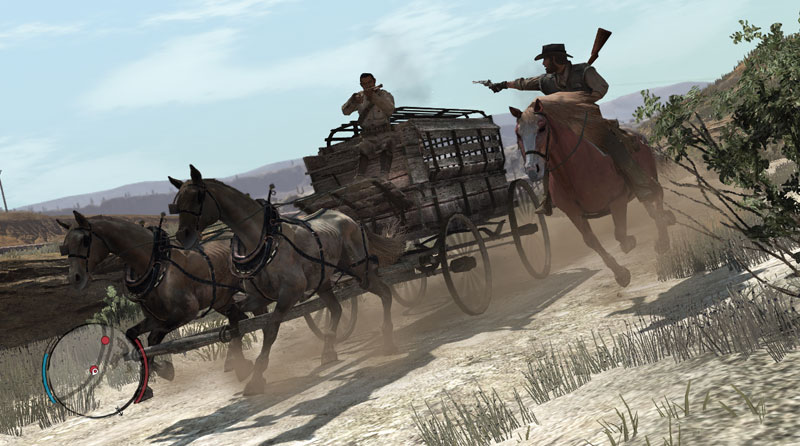
Yup, Rockstar's done it again. Red Dead Redemption's the real deal. For my more detailed thoughts on it you can read my review in the post below this, but nobody but Rockstar seems to be able to mix fun gameplay with such a well-written and presented storyline. This is a Western video game like none other that I've played, single-handedly destroying the original Red Dead Revolver and Neversoft's (also good,) GUN. This is why I play video games in the first place, to always be in awe at the many activities available to me, to realize that every one of these activities is well-made and fun to play, to see that amazing visuals and audio can make it feel like I'm really journeying through the old West....it's amazing. This is definitely the best game of the year, and though it's similar to GTA in many ways, it also never stops feeling like its own thing. If you haven't played this one yet, definitely give it a shot. Amazing experience to top a year of great games.
Here's hoping for more great stuff this year, 2011!
Review: Red Dead Redemption. In a word, amazing.
If there's one studio that can be counted on to provide an excellent experience, it's Rockstar. Known for their fun gameplay as well as their gritty and incredibly well-written storylines, opening up a game from Rockstar ensures that you're about to spend hours and hours in a brilliantly-developed, fully realized world. I have to say, though, that I've had my concerns lately that they might not "still have it." GTA4 was a great but also very flawed game, Manhunt 2 was a total misstep, and the early information we've gotten on Max Payne 3, which they're taking over from Remedy, makes it look like that's going to be a total disaster.
Red Dead Redemption, though, proves that the publisher, at least for now, is back on track. To call this an improvement on the original Red Dead Revolver would be an understatement, this is not only significantly better than that first effort, but it stands as one of the best games this console generation.
Red Dead Redemption is set in 1911 in the American old West as it's beginning to die off. Trains now bring business-savvy "city folks" out to the West in larger numbers every day, people who are buying up the property owned by the cowboys and beginning the process of corporatizing and industrializing. The automobile is starting to become more common, people are beginning to hear about machines that can make men fly, the Natives are at long last losing their battle with the settlers, and the government is taking over for local law enforcement. For now, though, the West is still an untamed place, with bandits and other outlaws running rampant, with nobody but corrupt police agencies to attempt to keep the peace.
Main character John Marston simply wants out, wanting to rid himself of his old life as a criminal. He has a wife and son, and they live on a ranch herding cattle. This is until the government kidnaps Marston's family, forcing him to hunt down his former partners in crime in exchange for his family's freedom. It's through this situation that he's thrust back into untamed Wild West.
First thing's first. Red Dead Redemption has an incredible atmosphere. From the small but bustling Western towns to the city of Blackwater, through the poor country of Mexico as it's in the midst of civil war up to the forested hills occupied by the Natives, Red Dead Redemption's world is as varied as it is lifelike. As you travel across the plains on your horse, you'll see birds fly above you, dangerous animals scurrying by, other travelers passing you, wild horses galloping over the hills, and much more....and it's all totally interactive. You can kill and skin animals to sell their hides for cash, if you see someone being robbed you can step in and help them, (or rob them yourself,) you can take bounties in the towns and then try to capture them either dead or alive, you can tame wild horses, have some drinks, gamble, ...I mean, it's amazing. There's so much to do in this world that even though you're provided an optional warp feature to take you from one area to another, I almost never used it, simply because that would deprive me of so much of the fun of this game, which is really in traveling across the West and getting to interact with it. As you journey from one area to another, you'll see people who can provide you with sidequests to take on. When you accept one of these, you have all the time you want to do them, they'll just be placed on your radar and in your journal, for you can come back to whenever you want. I'm never a sidequest person, since I hate anything that interrupts the pace of the main story, but since taking on a sidequest means that you have an infinite amount of time to do it, you can get to it when you have the time. As a result, I found myself doing these side missions almost as often as I was on the main story.
It helps that the sidequests are often just as fun and interesting as some of the main missions. That's also what's so satisfying about Red Dead Redemption: it's always fun to play. The shooting, which uses a much-improved variation on GTA4's cover system, feels perfect, the horses control very well, the radar always keeps you on track, and the checkpoints are well-placed. From the missions to the open world setting, everything in Red Dead Redemption has been done nearly to perfection, and as far as open world gaming goes, a genre that Rockstar revolutionized back with GTA3, this might be their finest effort. Sure, the world's not as big as the last couple GTA games, but in a way, it's better for that, because it's rarely tedious to travel through and there's no shortage of optional things to do and missions to progress the story.
The story is, as usual, top-quality, with dialogue that at times sounds so realistic that the characters might as well be right in the room with you having a conversation. This is how people really talk. Everyone's Western accents sound great too, and the main character, John Marston, is a very likeable guy who's not quite "good" but also not quite "bad." He's a man of principle and he has a lot of respect for the people who respect him, but if you piss him off, it will likely be the last thing you do. This type of character allows the developers to play with a morality system a bit. For doing good things for people, you gain honor, for doing criminal activities, you lose it. For doing anything, you gain fame, and the world treats you differently whether you choose to make Marston relatively good or relatively bad. None of this affects the main storyline except on very rare occasions, but it helps flesh out the game and gives you a lot of incentives to take on side missions. Do you make money by helping out the town sheriff guard at night or do you help the shady guy who offers you cash for stealing the town's food cart? The choice is all yours.
Similarly to GTA4, as you travel from one area to another during a mission, Marston and those he's working with will exchange dialogue that's as interesting as the main story, and through this dialogue you gain insight into the game's world and its characters. The characters and story remain at the forefront and make Red Dead Redemption so compelling that I found myself having to do "just one more mission" before shutting the game off just so I could see what would happen next.
Red Dead Redemption's world is realized through gorgeous visuals that bring every location to life, perfect audio that not only delivers the top-notch voice acting but the sound effects that drew me into the world, stealing the show from the also amazing music. There are occasional glitches: one time I had to restart from a checkpoint in a mission to fix the problem, at another time the game skipped a cutscene entirely that I had to then watch on Youtube, but those are really the only flaws I can think of with regard to Redemption's presentation.
There are some other little things worth pointing out, though. Yes, this game does use gameplay features that will be familiar to GTA fans. While I wouldn't go as far as to call this "GTA in the West" since this game features a lot that sets it apart from GTA, it's true that as far as Rockstar's whole "open world game design" blueprint is concerned, Red Dead Redemption doesn't make a whole lot of changes. The "Wanted" system feels tacked on and a little under-developed, and that's one area I wish had received a total change from its GTA4 roots. Similarly to GTA4, the game's clock is available at the start menu instead of being visible constantly. Why? Seems like an inconvenience to me. I also have to point out that similarly to GTA4, this game has a difficult time knowing when to end. A lengthy epilogue REALLY kills the pace, and the ending itself is a little hard to find. Call me a traditionalist, but I just like seeing credits at the end of a game. And in Redemption, once you beat the game, you're just dumped right back out onto the field with the game not really making it clear to you where you need to go to go to do the last mini-mission that will trigger the *real* ending. I also never quite managed to get the hang of the whole "dueling" system, though thankfully there's not too much of it. The only other thing I'd have to point out is that Red Dead Redemption really isn't all that challenging. Now, to me personally, the difficulty was just right, I have no complaints with it, but people who buy this looking for a challenge may be disappointed. The difficult missions don't start happening until the game's second half, and even these should be no sweat for GTA fans. There is a bullet time feature that makes you nearly invincible for a few seconds as you can target enemies in slow-mo, and your health regenerates pretty quickly. Enemies you kill drop plenty of ammo and loot, so I never found much of a need to head to the gun store to buy ammunition or the doctor to buy health packs. Then again, though, with a somewhat low difficulty level, you also get a low level of tedium, and this is easily Red Dead Redemption's biggest improvement over GTA4.
Verdict: None of these flaws prevent Red Dead Redemption from being an amazing experience. From the start, I found myself drawn in to the main character and the amazingly-developed world that Rockstar has created. The writing's sharp and stands a big step above what can be found in a lot of video games, and the voice acting is great. The shooting system is amazingly fun and it never gets old, and there's always a cool new weapon or creative new type of mission or new setting thrown your way to keep things fresh. Where this game just amazes, though, is the feeling you get when exploring this vast wild west, the feeling you get when you head from your purchased room at the Saloon through the packed bar, and out onto your map to see everything that's currently at your disposal. There's always something to do, and almost all of it's a blast. As far as open world gaming goes, Redemption certainly doesn't re-invent the wheel, but instead, it probably perfects it. Nothing wrong with that.
Presentation: Massive lifelike world with no loading breaks is always a treat to explore. Towns seamlessly blend with the vast emptiness. Story and dialogue are amazing, demonstrating that Rockstar remains at the top of their game. Some glitches occasionally rear their ugly heads, though this is very rare.
Graphics: Beautiful game, the visuals capture the setting perfectly. Some characters' faces may leave a bit to be desired, but most look great and are very expressive. Very well-directed cutscenes that seamlessly blend with the gameplay.
Audio: The sound effects are so lifelike and absorbing that I felt like I was really out there. Voice acting is top-quality, great musical score with some cool original songs as well.
Gameplay: Fun from the start. Perfect shooting controls, awesome missions, never any shortage of things to do. Gameplay will be familiar to GTA fans but there is enough new here to set Red Dead Redemption apart. Not too challenging but as a result, always a fun experience.
Replay Value: You can still explore the world after the game's conclusion, and I imagine you can have a lot of fun playing through the game again if you decide you want to try developing your main character in the opposite direction.
Overall Score: 9.5
(My reviews go on a .5 scale.)
Sunday, January 2, 2011
Blog Post: Awesome games that just missed the Top 5
Well, we have my top 5 for 2010:
*Sin and Punishment: Star Successor
*Enslaved: Odyssey to the West
*Final Fantasy XIII
*Red Dead Redemption
*Super Mario Galaxy 2
As soon as I finish a couple of these games, I'll be ready to say for sure which one has been my favorite game this year, and it won't be an easy choice to make.
Until then, though, I decided I'd give some recognition to the games that were good but that didn't quite make it into my top 5.
Here's a list of games deserving of recognition.
Why you should play it: Kirby's Epic Yarn was one of the biggest surprises of 2010 for me. The game has an amazing visual look and a charming atmosphere, not to mention very fun and inventive platforming. Plus, nothing was as awesome as seeing yarn versions of King Dedede and Meta Knight.
Why it didn't make it: The easy difficulty made this a fun, relaxing gameplay experience, but this, combined with the game's very childishly-delivered story, also makes this a game that's a little too difficult to recommend to older gamers for $50. Younger gamers will probably have their minds blown by it. For older gamers, it's a fun playthrough that I recommend, but worth $50.......eh. Debatable.
Why you should play it: Yakuza 3 was a game that felt like it took forever to reach Western shores, and there was a real debate as to whether Western gamers would ever get the chance to continue Kazuma's epic story. The Yakuza series is one of the strangest (in a great way) game series I've ever played. Brutal, over-the-top street fighting action is mixed with a fantastic story that's delivered in well-translated and voice acted cutscenes and creates a truly awesome tale. The cities you explore (which in Yakuza 3 includes the seaside town of Okinawa) are brimming with life and tasks to complete. Karaoke is beyond epic. This is definitely a game worth playing, and it looks like enough gamers have done that: we'll be getting Yakuza 4 this spring.
Why it didn't make it: The Yakuza series has always dabbled in mundane quests, but Yakuza 3 took this to a new level by essentially making the badass Kazuma errand-boy for a group of whiny orphans. While amusing at first, these nonstop fetch quests began seriously bogging the game down at times, and I wish Sega of America had taken the axe to these instead of removing the Hostess Clubs and some of the sidequests from the Western release. And though the story's still awesome, it's missing a lot of the film noir flare and complex intrigue that made the previous two Yakuza games, especially Yakuza 2, excel so much. It also ends rather anti-climactically, again, compared to others in the series. Still worth a play for sure, but not the best in the series.
Why you should play it: Heavy Rain proves that Indigo Prophecy was no fluke. European developer Quantic Dream has once again blurred the line between movie and video game with every cutscene being interactive and giving you full control of what your character says or does. Any character can die in this game, and once they're gone, they're gone. A lot of this is up to you. Near the end of the game I put my controller down and sat there for 10 minutes, trying to make the hardest decision I had to make in a video game since, well, the end of GTA4. I'm happy to say that unlike in GTA4, this time I made the right choice to get the ending I wanted. :]
Why it didn't make it: Though I enjoyed this game, I have to admit that it lacks some of the freshness that Indigo Prophecy had, and I found myself starting to wish that Quantic Dream would try their hand at something more gameplay-driven very soon. The voice acting is spotty at times, as are the controls, and the commands, relying largely on analog stick and Six Axis movements, are often confusing. If you have the Playstation Move, I'd definitely recommend using it for this game.
Why you should play it: Alan Wake is even more proof that Remedy, the studio responsible of the first two Max Payne games, knows how to tell a story. The narrative here is very strong, as is the soundtrack, which is really one of the best musical scores I think the horror genre has ever seen. And Poets of the Fall needs to be in more video games. Their song fit Max Payne 2 like a glove and the work they've done for Alan Wake is great too. The interesting story and great visuals all combine to make an experience that's as scary as it is action-packed. I fear for Max Payne 3, because it will be done by another studio, and I think it'll be lost without Sam Lake doing the writing.
Why it didn't make it: The gameplay's a bit underwhelming. The flashlight mechanic is innovative and works well, but the endless dark forests you constantly find yourself having to hike through get old awfully fast, and the town of Bright Falls feels like an afterthought when it should have been an essential part of the game. And it's hard to be surprised by enemies ambushing you when the game (loudly and obviously) autosaves right before every enemy encounter.
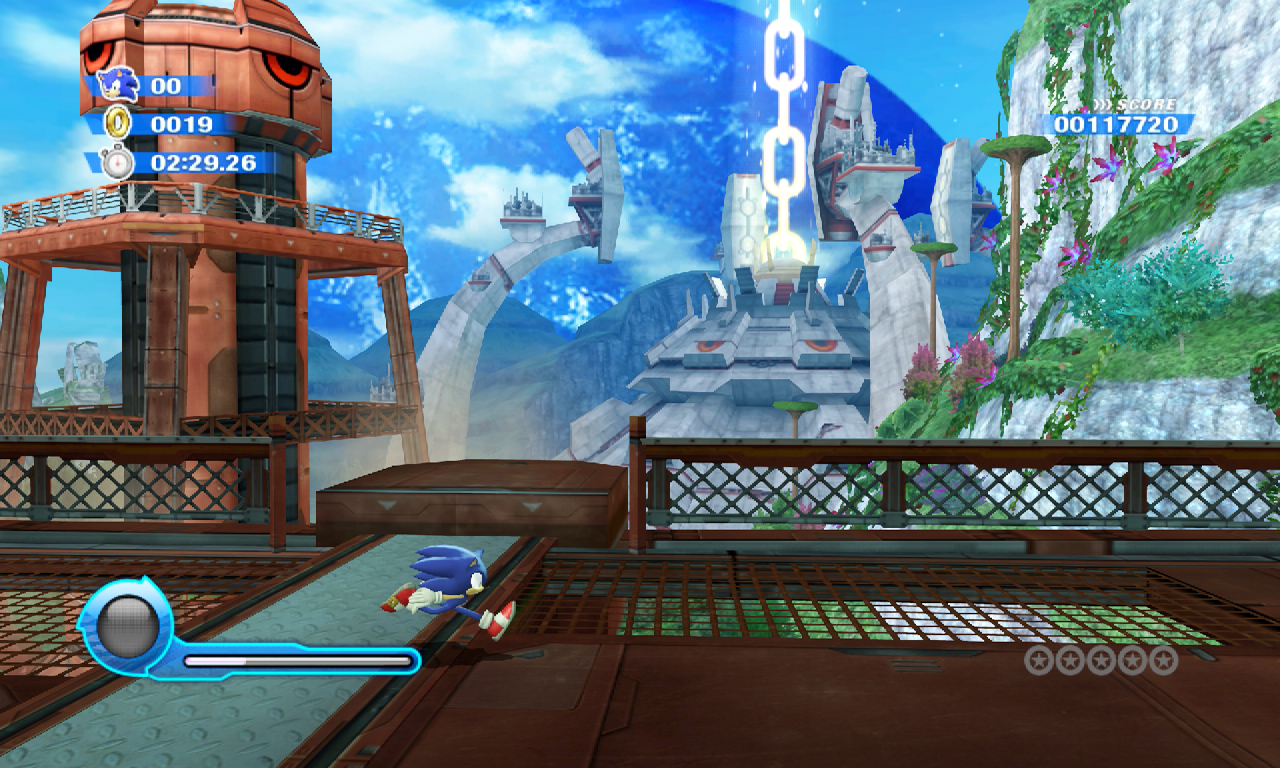
Why you should play it: Sonic Colors is proof that SonicTeam still has it in them to create innovative and fun platforming. An energetic and catchy soundtrack mixes in with some very colorful environments and cool Wisp powerups, not to mention some fun writing, to create yet another strong Sonic game that demonstrates Sega's willingness to improve the series.
Why it didn't make it: Damnit SonicTeam please do something about these controls. If you're really going to continue taking this series in a more 2D-oriented direction, you need to design a new control scheme that isn't so slippery. And please for $50 make a game that's not beatable in two sittings. Nothing's more of a buzzkill than when an awesome game ends too soon.
Why you should play it: Halo: Reach, the final Halo game from Bungie, tells the story of the ill-fated attempt to save the planet Reach from the Covenant invasion. This is one of the best campaigns of the series, especially if you're playing splitscreen or online co-op. Getting into your gunships and doing battle in the skies as you dodge the tall skyscrapers of the city is easily one of the most epic moments of the series, and the campaign feels a lot more focused than Halo 3's somewhat vehicle-focused campaign did. The areas here are smaller but you feel much more like a team, while in Halo 3 you'd get into a Ghost and pretty much drive away from everyone up to the next massive boss. Aside from a strong campaign, Reach of course has its amazing multiplayer.
Why it didn't make it: It's hard to be surprised by a Halo game after all this time, and Reach certainly feels familiar. The sky battles were awesome bits of new stuff, I wish more of the campaign and multiplayer felt as fresh as these did. I also wish there were more multiplayer maps available in the box. I know the trend is to hold some off for DLC, but come on, guys...the game was $60.
Why you should play it: Metroid: Other M is actually the type of risk I'd like to see Nintendo take more often. Granted, this game has its issues, but I'm just happy to see them make a game (and Epic Yarn was another one) that wasn't afraid to try something a bit different. Metroid Other M was very story-driven, moreso than any other Metroid game, and the accessible difficulty, fast pace, and interesting use of hand-to-hand combat made this game feel like another world from the Metroid Prime games. It's a lot of fun and I was very glad to have played it. I actually liked the story too and thought it added a lot to the game.
Why it didn't make it: that said, a somewhat surprising lack of polish seems to exist in every corner of this game. Moments where cutscenes stop dead in their tracks for you to locate a tiny pixel on the screen are ridiculously dumb, some areas look nice while others look borderline unfinished, and the voice acting would have sounded a lot better in 1999. Not to mention, the way Samus unlocks her powers makes no sense whatsoever, even in this game's established universe. None of these flaws stop Other M from being a game worth playing, and I recommend it to all Wii owners, but they do prevent it from reaching its status as a top-tier game of the year.
Anyway, there you have it. These were all games worth playing, and I feel that they deserve recognition, even though they, for whatever reason, didn't make my top 5 for the year. 2010 was an awesome year for video games, and I'm looking forward to an exciting 2011.
Next post: My GOTY 2010. Stay tuned, whoever's reading this. :]
*Sin and Punishment: Star Successor
*Enslaved: Odyssey to the West
*Final Fantasy XIII
*Red Dead Redemption
*Super Mario Galaxy 2
As soon as I finish a couple of these games, I'll be ready to say for sure which one has been my favorite game this year, and it won't be an easy choice to make.
Until then, though, I decided I'd give some recognition to the games that were good but that didn't quite make it into my top 5.
Here's a list of games deserving of recognition.
Why you should play it: Kirby's Epic Yarn was one of the biggest surprises of 2010 for me. The game has an amazing visual look and a charming atmosphere, not to mention very fun and inventive platforming. Plus, nothing was as awesome as seeing yarn versions of King Dedede and Meta Knight.
Why it didn't make it: The easy difficulty made this a fun, relaxing gameplay experience, but this, combined with the game's very childishly-delivered story, also makes this a game that's a little too difficult to recommend to older gamers for $50. Younger gamers will probably have their minds blown by it. For older gamers, it's a fun playthrough that I recommend, but worth $50.......eh. Debatable.
Why you should play it: Yakuza 3 was a game that felt like it took forever to reach Western shores, and there was a real debate as to whether Western gamers would ever get the chance to continue Kazuma's epic story. The Yakuza series is one of the strangest (in a great way) game series I've ever played. Brutal, over-the-top street fighting action is mixed with a fantastic story that's delivered in well-translated and voice acted cutscenes and creates a truly awesome tale. The cities you explore (which in Yakuza 3 includes the seaside town of Okinawa) are brimming with life and tasks to complete. Karaoke is beyond epic. This is definitely a game worth playing, and it looks like enough gamers have done that: we'll be getting Yakuza 4 this spring.
Why it didn't make it: The Yakuza series has always dabbled in mundane quests, but Yakuza 3 took this to a new level by essentially making the badass Kazuma errand-boy for a group of whiny orphans. While amusing at first, these nonstop fetch quests began seriously bogging the game down at times, and I wish Sega of America had taken the axe to these instead of removing the Hostess Clubs and some of the sidequests from the Western release. And though the story's still awesome, it's missing a lot of the film noir flare and complex intrigue that made the previous two Yakuza games, especially Yakuza 2, excel so much. It also ends rather anti-climactically, again, compared to others in the series. Still worth a play for sure, but not the best in the series.
Why you should play it: Heavy Rain proves that Indigo Prophecy was no fluke. European developer Quantic Dream has once again blurred the line between movie and video game with every cutscene being interactive and giving you full control of what your character says or does. Any character can die in this game, and once they're gone, they're gone. A lot of this is up to you. Near the end of the game I put my controller down and sat there for 10 minutes, trying to make the hardest decision I had to make in a video game since, well, the end of GTA4. I'm happy to say that unlike in GTA4, this time I made the right choice to get the ending I wanted. :]
Why it didn't make it: Though I enjoyed this game, I have to admit that it lacks some of the freshness that Indigo Prophecy had, and I found myself starting to wish that Quantic Dream would try their hand at something more gameplay-driven very soon. The voice acting is spotty at times, as are the controls, and the commands, relying largely on analog stick and Six Axis movements, are often confusing. If you have the Playstation Move, I'd definitely recommend using it for this game.
Why you should play it: Alan Wake is even more proof that Remedy, the studio responsible of the first two Max Payne games, knows how to tell a story. The narrative here is very strong, as is the soundtrack, which is really one of the best musical scores I think the horror genre has ever seen. And Poets of the Fall needs to be in more video games. Their song fit Max Payne 2 like a glove and the work they've done for Alan Wake is great too. The interesting story and great visuals all combine to make an experience that's as scary as it is action-packed. I fear for Max Payne 3, because it will be done by another studio, and I think it'll be lost without Sam Lake doing the writing.
Why it didn't make it: The gameplay's a bit underwhelming. The flashlight mechanic is innovative and works well, but the endless dark forests you constantly find yourself having to hike through get old awfully fast, and the town of Bright Falls feels like an afterthought when it should have been an essential part of the game. And it's hard to be surprised by enemies ambushing you when the game (loudly and obviously) autosaves right before every enemy encounter.
Why you should play it: Sonic Colors is proof that SonicTeam still has it in them to create innovative and fun platforming. An energetic and catchy soundtrack mixes in with some very colorful environments and cool Wisp powerups, not to mention some fun writing, to create yet another strong Sonic game that demonstrates Sega's willingness to improve the series.
Why it didn't make it: Damnit SonicTeam please do something about these controls. If you're really going to continue taking this series in a more 2D-oriented direction, you need to design a new control scheme that isn't so slippery. And please for $50 make a game that's not beatable in two sittings. Nothing's more of a buzzkill than when an awesome game ends too soon.
Why you should play it: Halo: Reach, the final Halo game from Bungie, tells the story of the ill-fated attempt to save the planet Reach from the Covenant invasion. This is one of the best campaigns of the series, especially if you're playing splitscreen or online co-op. Getting into your gunships and doing battle in the skies as you dodge the tall skyscrapers of the city is easily one of the most epic moments of the series, and the campaign feels a lot more focused than Halo 3's somewhat vehicle-focused campaign did. The areas here are smaller but you feel much more like a team, while in Halo 3 you'd get into a Ghost and pretty much drive away from everyone up to the next massive boss. Aside from a strong campaign, Reach of course has its amazing multiplayer.
Why it didn't make it: It's hard to be surprised by a Halo game after all this time, and Reach certainly feels familiar. The sky battles were awesome bits of new stuff, I wish more of the campaign and multiplayer felt as fresh as these did. I also wish there were more multiplayer maps available in the box. I know the trend is to hold some off for DLC, but come on, guys...the game was $60.
Why it didn't make it: that said, a somewhat surprising lack of polish seems to exist in every corner of this game. Moments where cutscenes stop dead in their tracks for you to locate a tiny pixel on the screen are ridiculously dumb, some areas look nice while others look borderline unfinished, and the voice acting would have sounded a lot better in 1999. Not to mention, the way Samus unlocks her powers makes no sense whatsoever, even in this game's established universe. None of these flaws stop Other M from being a game worth playing, and I recommend it to all Wii owners, but they do prevent it from reaching its status as a top-tier game of the year.
Anyway, there you have it. These were all games worth playing, and I feel that they deserve recognition, even though they, for whatever reason, didn't make my top 5 for the year. 2010 was an awesome year for video games, and I'm looking forward to an exciting 2011.
Next post: My GOTY 2010. Stay tuned, whoever's reading this. :]
Saturday, January 1, 2011
Game of the Year 2010 Fifth ( and final ) Nomination: Super Mario Galaxy 2
Super Mario Galaxy 2 is exactly what the title says....it's more Super Mario Galaxy. Though I'm usually not a big fan of this type of "more of the same," sequel, Super Mario Galaxy 2 totally proved that you can have a "more of the same" sequel that doesn't feel like, well... more of the same. An entirely new and stremlined hub world made it easy to jump from one level to another, and the levels themselves took some of the more brilliant ideas from the first Mario Galaxy game and expanded on them. There's no shortage of platforming brilliance in this game, and the visuals do a great job of working around the Wii's weak graphics capabilities. This is one of the best-looking platformers this generation, HD system or not. The art direction's fantastic, the lighting effects are beautiful, and the camera's very cooperative. Enemy designs and boss designs look better than ever. Even the challenge has been ramped up a bit from the first Mario Galaxy game.
With the exception of the story and the final boss battle, Super Mario Galaxy 2 is an improvement over the first Super Mario Galaxy in every way, which is an accomplishment, since the first Mario Galaxy was one of the best games this generation. Mario Galaxy 2 proved itself as being much more than a $50 expansion pack to Galaxy 1, and it deserves the near-universal critical acclaim it's been given.
And those are the nominees. I'll need a bit more time to give them all a fair shake but I'll have a GOTY winner up soon.
-nS
Subscribe to:
Posts (Atom)